Best AI Mode Rank Trackers for 2026 (11 Tools That Track Google AI Mode)
-min.png)
Run your domain through the free AI Mode Checker above to see whether Google AI Mode names you, before you spend a cent on a tracker.
Google AI Mode does not give you a position. It gives an answer, then cites a few sources. So the old question, "where do I rank," is the wrong one. The real question is whether your brand is inside the answer at all, and which of your URLs Google trusted enough to cite. The catch is that half the tools sold as "AI Mode rank trackers" actually track AI Overviews, or worse, gate real AI Mode behind their top tier. This guide fixes that. I list 11 tools that genuinely track Google AI Mode, I am honest about which ones hide it behind an add-on, and I back the strategy with peer-reviewed research instead of vendor decks.
TL;DR
- Best overall AI Mode rank tracker: Peec AI. Daily Google AI Mode tracking across every major engine, clean dashboards, and unlimited seats, so the whole team fits.
- Best for enterprise brand safety: Scrunch AI, though AI Mode sits on the Enterprise tier.
- Best for agencies and multi-country clients: SE Visible, with cached snapshots and unlimited seats.
- Cheapest entry: Keyword.com, but confirm AI Mode is included and not a paid add-on.
- Before you buy, verify the tool captures the real "Try AI Mode" answer, not the AI Overviews block. The free AI Mode Checker at the top is the fastest way to test.
Google AI Mode, by the numbers
- AI Overviews, the surface AI Mode grows out of, now appear above the normal results for 51.5% of real user queries .
- They fire on 13.7% of all searches and 64.7% of question-style searches , reaching more than two billion users.
- The sources behind AI answers barely overlap with Google's normal results, and generative search leans on niche and earned sources over big brand sites .
- AI Mode answers are volatile. The same prompt returns different citations across runs and minor query edits , which is exactly why a one-time check lies to you.
What "rank" actually means inside Google AI Mode
AI Mode replaces the list of ten blue links with one generated answer, inline citations, and follow-up prompts. There is no fixed number one. So a real AI Mode rank tracker measures four things instead of position. Inclusion, did your brand appear at all. Mention, was your name written into the answer text. Citation, did Google link one of your URLs as a source. Answer share, how much of the answer space you own versus competitors. If a tool only reports a "visibility score" without showing the cited URLs and the raw answer, it is not really tracking AI Mode. I pulled apart how this surface works in my breakdown of Google AI Mode under the hood .
How to check a tool really tracks AI Mode, not AI Overviews
This is where most tools quietly fail. AI Overviews is the answer block on a normal results page. AI Mode is the separate conversational experience. They cite different sources, so a tool that scrapes one cannot stand in for the other. Before you pay, ask the vendor for four things: a timestamped screenshot of the actual AI Mode answer it captured, URL-level citations rather than domain aggregates, the same prompt run from three countries to prove geo-localization, and the raw answer text in the export. If they cannot show all four, they are likely labeling AI Overviews tracking as AI Mode. The free AI Mode Checker at the top of this page is the quickest sanity test: run a prompt, see whether you show up in the real AI Mode answer, then judge the paid tools against that. For the deeper method, here is how I track AI Mode through Search Console .
AI Mode rank trackers compared
Coverage of Google AI Mode is the column that matters most, because several tools gate it behind a higher tier or an add-on. Confirm it before you buy.
| Tool | AI Mode in base plan | Refresh | Best for | Starts at |
|---|---|---|---|---|
| Peec AI | Yes | Daily | All-round teams and agencies | €89/mo |
| AEO Vision | Higher tier | Daily | Citation-level AI Mode tracking | $9/mo |
| Scrunch AI | No, Enterprise tier | Daily | Enterprise brand safety | $250/mo |
| SE Visible | Yes | Daily | Agencies, multi-country | $99/mo |
| AthenaHQ | Yes | Daily | Tracking plus pitches | $295/mo |
| Semrush AI Visibility Toolkit | Yes | Daily | Existing Semrush users | $99/mo |
| Ahrefs Brand Radar | Add-on per engine | Monthly | Existing Ahrefs users | $199/mo |
| seoClarity | Yes | On-demand | Global enterprises | Custom |
| Keyword.com | Yes | Hourly to weekly | Budget, flexible scheduling | $24.50/mo |
| Rankshift | Yes | Daily to weekly | Citation gap analysis | $92/mo |
| BrightEdge | Yes | Weekly | Large enterprises | Custom |
The 11 best AI Mode rank trackers
To determine the 11 best Google AI Mode rank trackers in 2026, I evaluated how each software captures interactive conversational search sessions, tracks brand mention rank, logs dynamic query fan-out sub-queries, and records source citation chips. Tracking AI Mode requires dedicated residential browser emulation rather than legacy SERP scrapers. Here is the detailed breakdown of each platform:
Peec AI
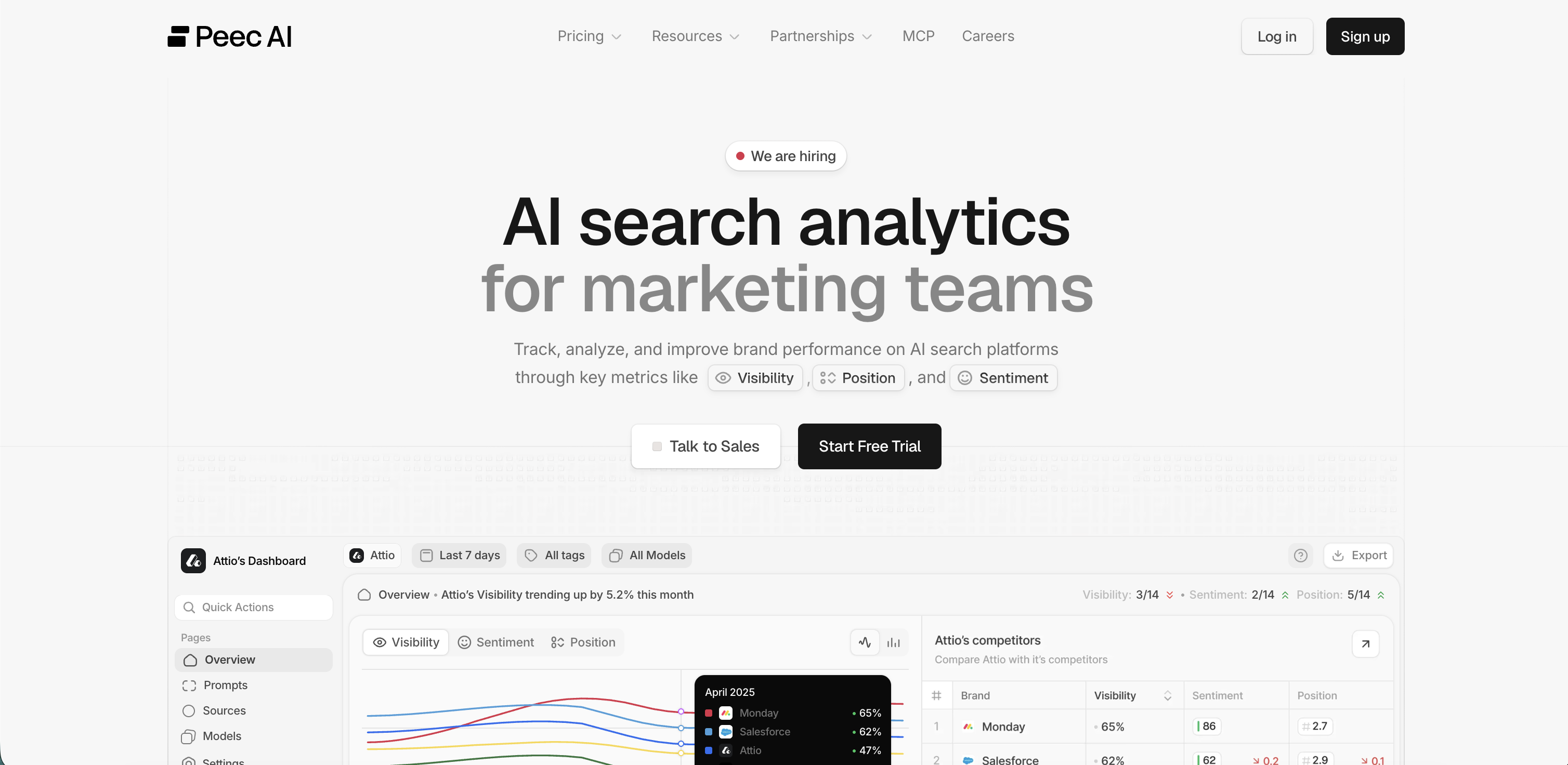
Peec AI is the tracker I reach for first, because it captures Google AI Mode in the base plan and gets the real interface daily, alongside ChatGPT, Perplexity, AI Overviews, Gemini, Claude, and Copilot. It shows inclusion, mentions, citations, and competitor share in a dashboard a non-technical team can read on day one, and every plan ships with unlimited seats so the whole team and your clients fit. Great for marketing teams!
AEO Vision
AEO Vision is my own research-first take on AI Mode tracking, built to show citation-level data instead of a vague visibility score. It tracks how your brand shows up across Google AI Mode, AI Overviews, ChatGPT, Perplexity, and Gemini, surfacing the exact prompts that mention you, the URLs Google cites, and how the answer frames your brand, then turns that into prioritized next steps you can actually ship. Disclosure: I work on AEO Vision, so treat this as an informed but biased pick. Honest limit: the entry tier is a $9 per month ChatGPT-only plan, so full Google AI Mode tracking sits on a higher tier. Starts at $9 per month.
Scrunch AI
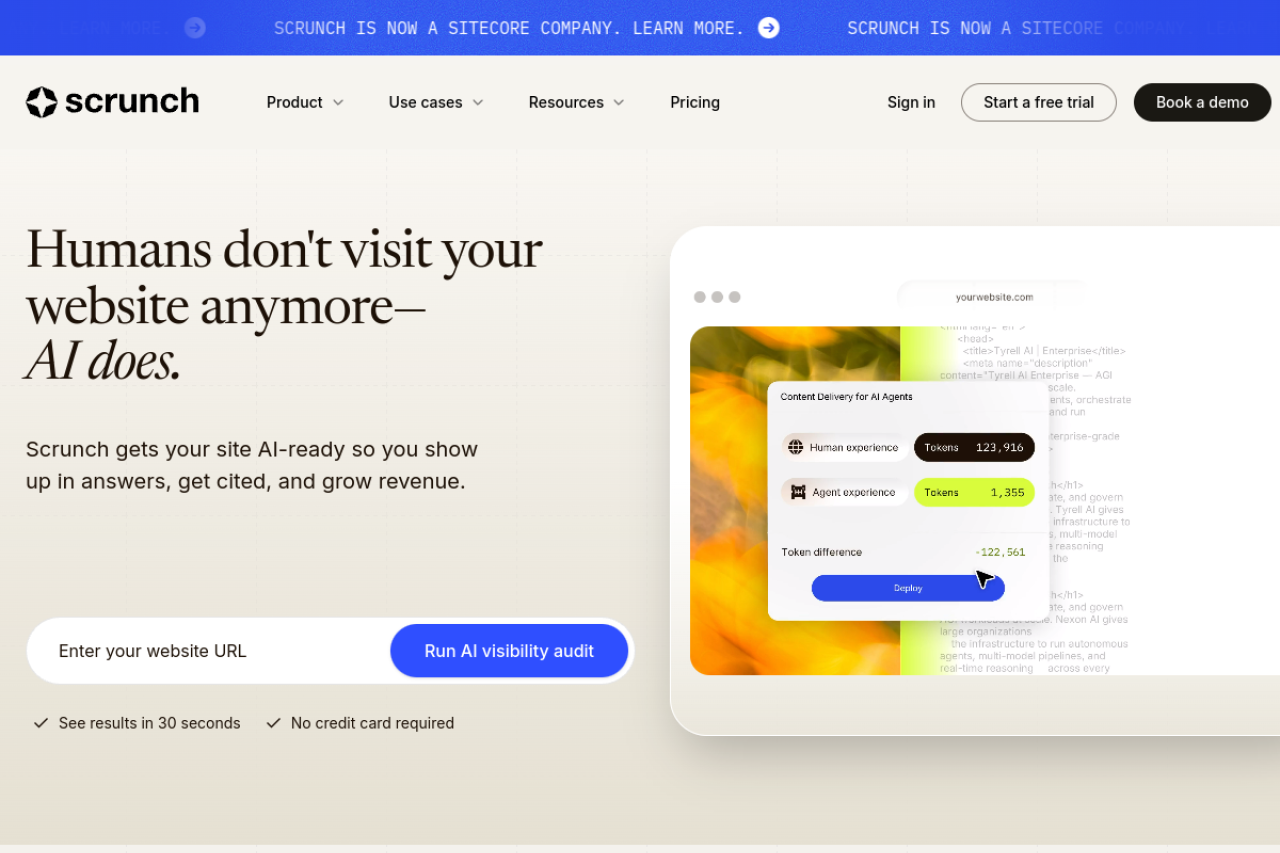
Scrunch AI is the enterprise pick, with daily prompt monitoring across personas, funnel stages, and geographies, plus a bot feed that shows when GPTBot and other crawlers hit your pages. Its Agent Experience Platform can serve an AI-friendly version of your site to lift citations. Honest limit: Google AI Mode is not in the Core plan, so you need the custom-priced Enterprise tier to track it, and it leans toward monitoring over action. Starts at $250 per month.
SE Visible
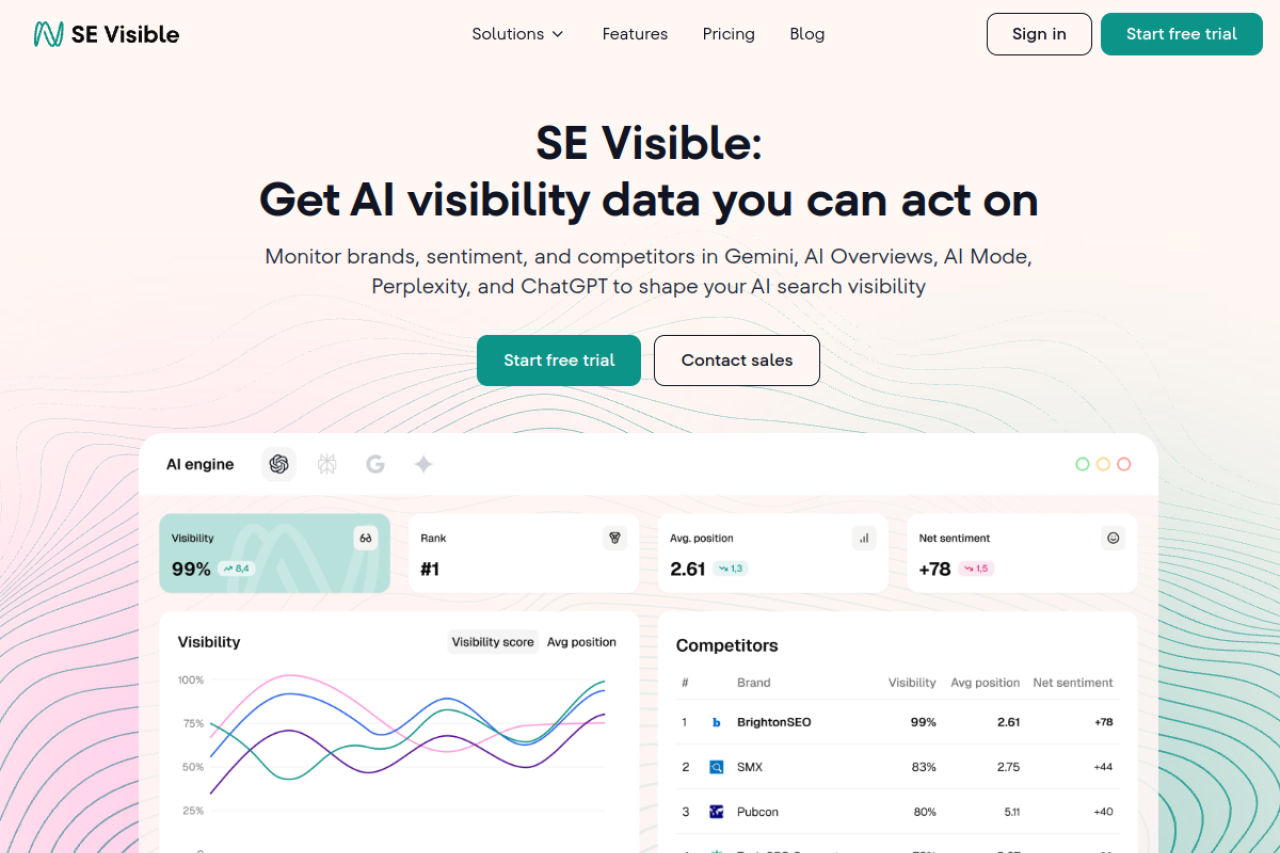
SE Visible is built by the SE Ranking team and tracks Google AI Mode, ChatGPT, Perplexity, Gemini, and AI Overviews across seven countries. It scrapes live answers and stores cached snapshots, so you can verify every mention by viewing the actual response, and all plans include unlimited seats, which makes it economical for agencies running many client brands. Honest limit: it is monitoring-only with no content workflow, and exports are CSV only. Starts at $99 per month.
AthenaHQ
AthenaHQ tracks Google AI Mode alongside ChatGPT, Perplexity, AI Overviews, Gemini, Claude, Copilot, and Grok, and pairs it with prospect and pitch workspaces plus an agency program that refers leads. It suggests content based on visibility gaps, so it leans more toward action than most. Honest limit: some on-page and content recommendations still feel early, so review them before you ship to a client. Starts at $295 per month.
Semrush AI Visibility Toolkit
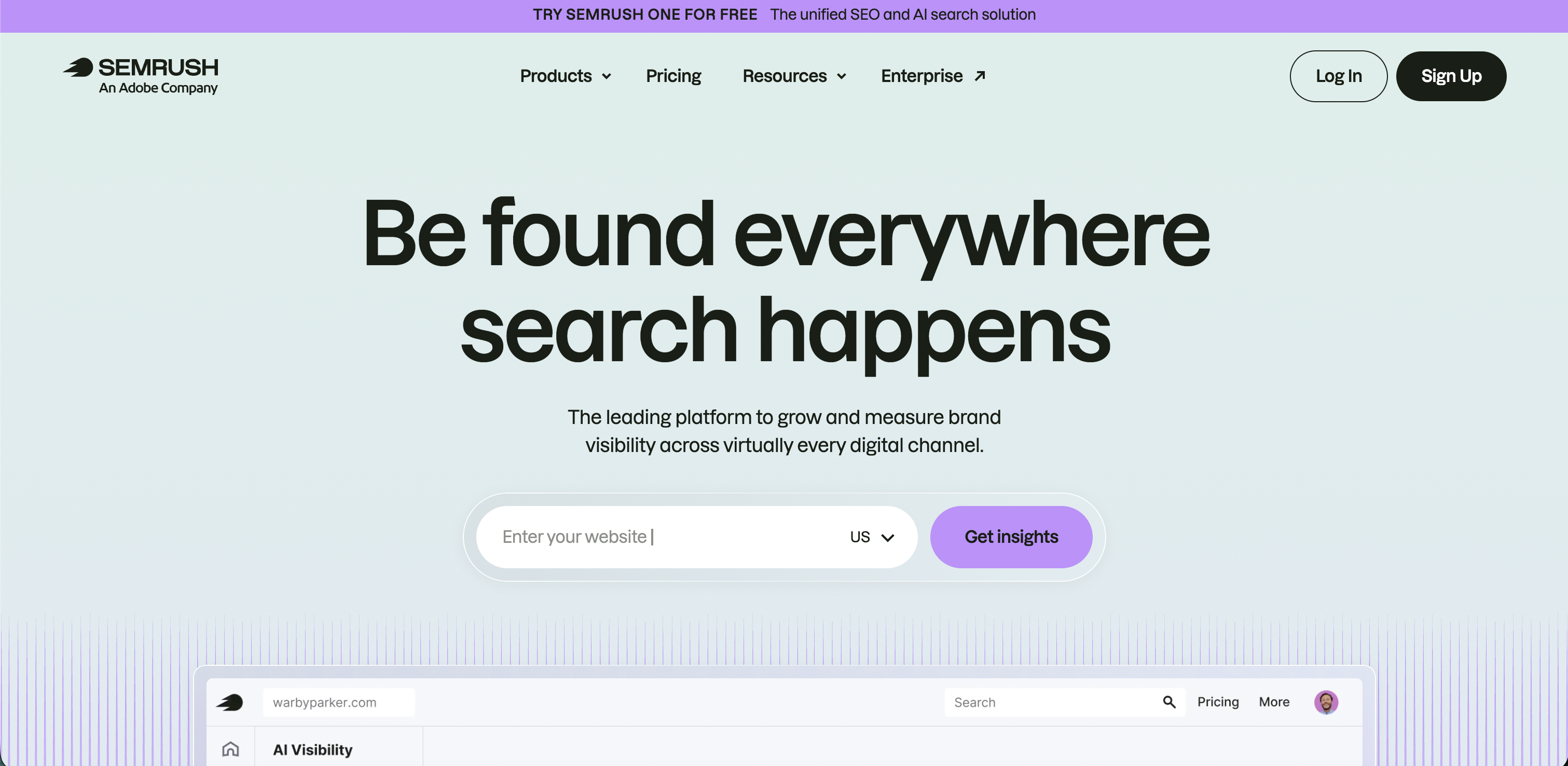
Semrush adds Google AI Mode as a trackable engine inside its AI Visibility Toolkit and Position Tracking, so existing users get AI Mode visibility scores, cited pages, sentiment, and share of voice without leaving the platform. Honest limit: the standalone toolkit covers only 25 prompts and one domain at the entry price, so multi-brand teams scale up cost quickly. Starts at $99 per month.
Ahrefs Brand Radar
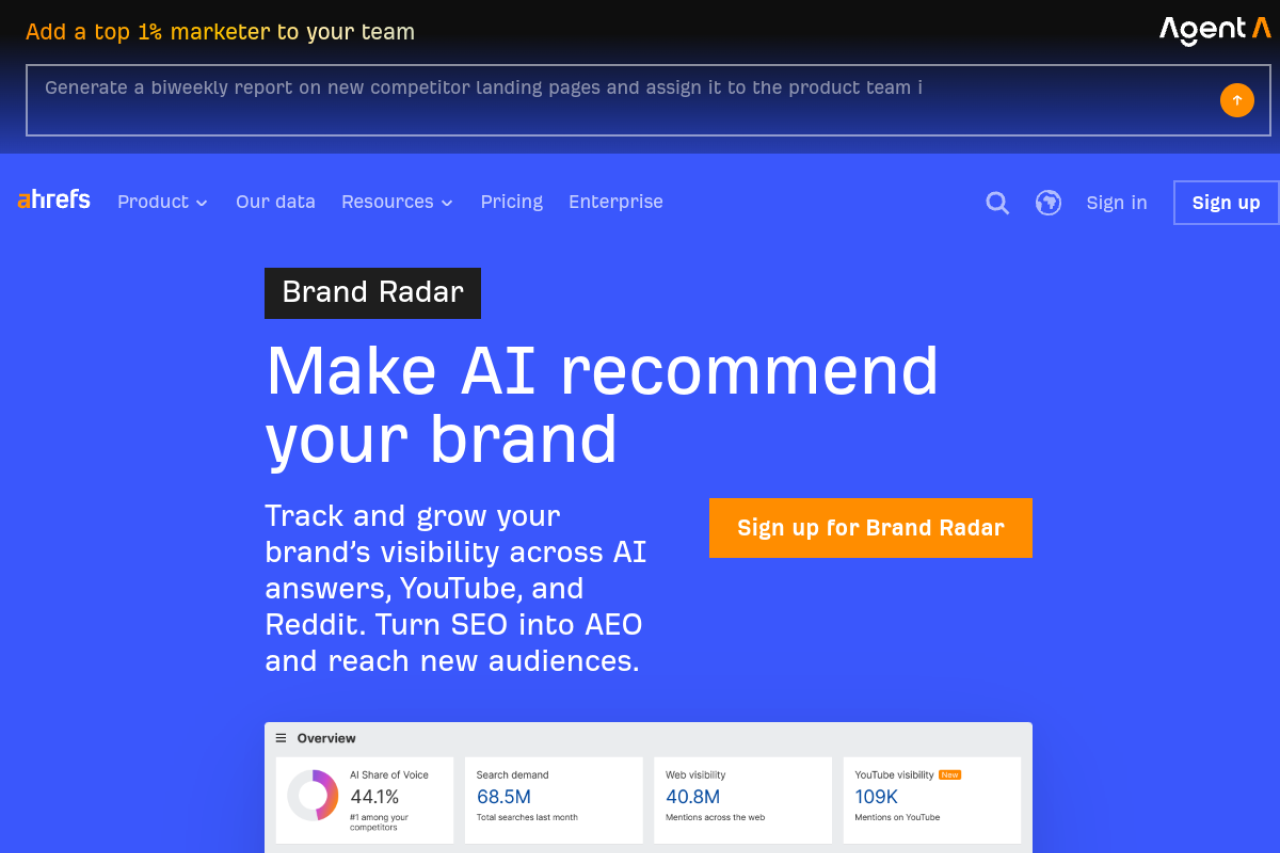
Ahrefs Brand Radar tracks Google AI Mode and AI Overviews alongside ChatGPT, Perplexity, Gemini, and Copilot, and its edge is tying AI citations back to your backlink and ranking data in Site Explorer. Honest limit: AI platforms refresh monthly, which is a real blind spot for a surface this volatile, and it needs an Ahrefs subscription plus a per-engine add-on. Starts at $199 per month per engine.
seoClarity
seoClarity is the enterprise suite option, with on-demand Google AI Mode tracking that shows which queries trigger AI Mode, whether you are mentioned or cited, and the traffic impact down to the URL, plus hallucination detection and step-by-step recommendations. Honest limit: it has a steep learning curve and custom quote-based pricing, so it is out of reach for small teams. Pricing is custom.
Keyword.com
Keyword.com offers Google AI Mode tracking as a credit-based add-on with the most flexible scheduling here, from hourly to weekly, and it stores complete AI answers over time so you can see exactly when a competitor gains or loses a citation. Honest limit: credit-based billing gets expensive for heavy refreshing, and credits reset monthly with no rollover. Starts at $24.50 per month.
Rankshift
Rankshift is a purpose-built AI visibility monitor with a strong citation gap analysis that flags URLs where competitors are cited and you are not, then turns those into tasks. It tracks Google AI Mode across eight models with historical snapshots, and every tier includes unlimited workspaces and users. Honest limit: it launched in 2025, so it has the least long-term data and the fewest reviews on this list. Starts at $92 per month.
BrightEdge
BrightEdge tracks Google AI Mode through its Generative Parser, which detects and trend-analyzes AI answer blocks, cited sources, and share of voice across large keyword sets, with API and CSV exports built for enterprise reporting. Honest limit: pricing is enterprise-only with no public rates, refresh is weekly, and there is no content execution layer. Pricing is custom.
What the research says about getting cited in AI Mode
A tracker tells you where you stand. The science tells you what moves the number, and none of this comes from a tool vendor.
AI Mode and AI Overviews run on a custom Gemini model that sources very differently from normal Google. A study of 11,500 queries found the sources behind generative answers barely overlap with Google's own results and skew toward niche and earned sources , and a large comparative study confirmed that AI answers diverge from web search in domain type, earned versus owned, and freshness . So your own landing page is not enough. You need third-party authority.
What gets cited is now measured directly. A controlled study of 252,000 trials across six models found topical relevance and list position are the biggest drivers of being cited first , with clear pricing and a recent date helping too, while formatting-only edits barely matter. Structure still counts: optimizing document architecture and chunking lifted citation rates by 17.3% across six engines , and on B2B pages, metadata and freshness, semantic HTML, and structured data showed the strongest link to being cited . I like to confirm this both ways, in the code and in the lab, which is the whole point of finding it in the code and watching science prove it .
How to improve your Google AI Mode visibility
Start from the prompts that actually trigger AI Mode in your category, not a random keyword list, and pull them from real data the way I describe in stop guessing which prompts to track . Map the query fan-out behind each one, since AI Mode expands a single prompt into many hidden searches, which I walk through in my AI Mode query fan-out analysis . Then match the structure of the pages that already win, earn placements on the third-party sources the model trusts, keep your AI crawlers unblocked, and measure weekly because the answer shifts run to run. For the wider toolkit, see my AI visibility tools guide and AEO and GEO tools guide , and for a worked example, how I optimized for AI Overviews .
Frequently asked questions
Here are clear, authoritative answers to the most common questions about tracking brand visibility and rankings inside Google AI Mode:
Does Google AI Mode have rankings like classic search?
No. AI Mode synthesizes one answer with inline citations instead of an ordered list, so there is no position one to win. A real AI Mode rank tracker measures inclusion, mentions, citations, and answer share, not a numbered rank.
How do I know a tool tracks Google AI Mode and not AI Overviews?
Ask for a timestamped screenshot of the actual AI Mode answer, URL-level citations, and the raw answer text in the export. AI Overviews and AI Mode cite different sources, so a tool that only captures the Overviews block is not tracking AI Mode. The free AI Mode Checker at the top of this page is the fastest way to sanity-check your own domain first.
What is the best free way to check AI Mode visibility?
Run your domain and a few category prompts through the AI Mode Checker embedded above. It shows whether Google AI Mode names you before you commit to a paid tracker, and you can also track AI search engines through Search Console .
Which AI Mode rank tracker is best for agencies?
SE Visible and Peec AI both include unlimited seats, which keeps cost flat as you add client brands, and SE Visible adds multi-country tracking with cached snapshots. Confirm AI Mode is in the plan you are quoted, since some tools gate it behind a higher tier.
How often should I track Google AI Mode?
Daily if you publish often, weekly at the minimum. AI Mode shifts citations run to run and after model updates, so a single measurement is unreliable . Track trends over weeks, not one snapshot.
Do Semrush and Ahrefs track AI Mode well enough?
The catch is refresh speed and gating: Ahrefs refreshes AI platforms monthly and charges per engine, which is slow for a volatile surface, so a dedicated daily tracker often captures more. They both track Google AI Mode now, which is convenient if you already live in their dashboards.
Sources and further reading
- Grossman et al., How Generative AI Disrupts Search: Google Search, Gemini, and AI Overviews , arXiv:2604.27790 (SIGIR 2026).
- Chen, Wang, Chen, Koudas, Navigating the Shift: A Comparative Analysis of Web Search and Generative AI Response Generation , arXiv:2601.16858 (EDBT/ICDT 2026).
- Xu, Iqbal, Montgomery, Measuring Google AI Overviews: Activation, Source Quality, Claim Fidelity, and Publisher Impact , arXiv:2605.14021.
- Vishwakarma, Kumar, Jamidar, What Gets Cited: Competitive GEO in AI Answer Engines , arXiv:2605.25517.
- Yu, Yang, Ding, Sato, Structural Feature Engineering for Generative Engine Optimization , arXiv:2603.29979.
- Kumar, Palkhouski, AI Answer Engine Citation Behavior: An Empirical Analysis of the GEO-16 Framework , arXiv:2509.10762.
- Chen, Koudas et al., Generative Engine Optimization: How to Dominate AI Search , arXiv:2509.08919.
Tracking Google AI Mode is a subset of AEO, not the whole picture. Pair AI Mode rank data with AI citations across ChatGPT, Perplexity and Gemini - that is what mature answer engine optimization programs actually measure.
Get new research on AI search, SEO experiments, and LLM visibility delivered to your inbox.
Powered by Substack · No spam · Unsubscribe anytime